Do you understand the numbers and symbols on a cricket scoreboard? A standard cricket scoreboard looks slightly different from an IPL one, and it may also vary depending on the device you’re using to watch the live stream.
The scoreboard gives a clear overview of the current status of both teams, as well as the batsmen and bowlers. Check out the image to get a better understanding!
Types of IPL Scoreboard
The IPL cricket scoreboard comes in different formats, and its appearance changes based on how you’re watching the live stream!
Whether you’re viewing it on a mobile device, at the stadium, or on TV, the presentation varies. So, let’s quickly understand what these numbers and symbols mean!
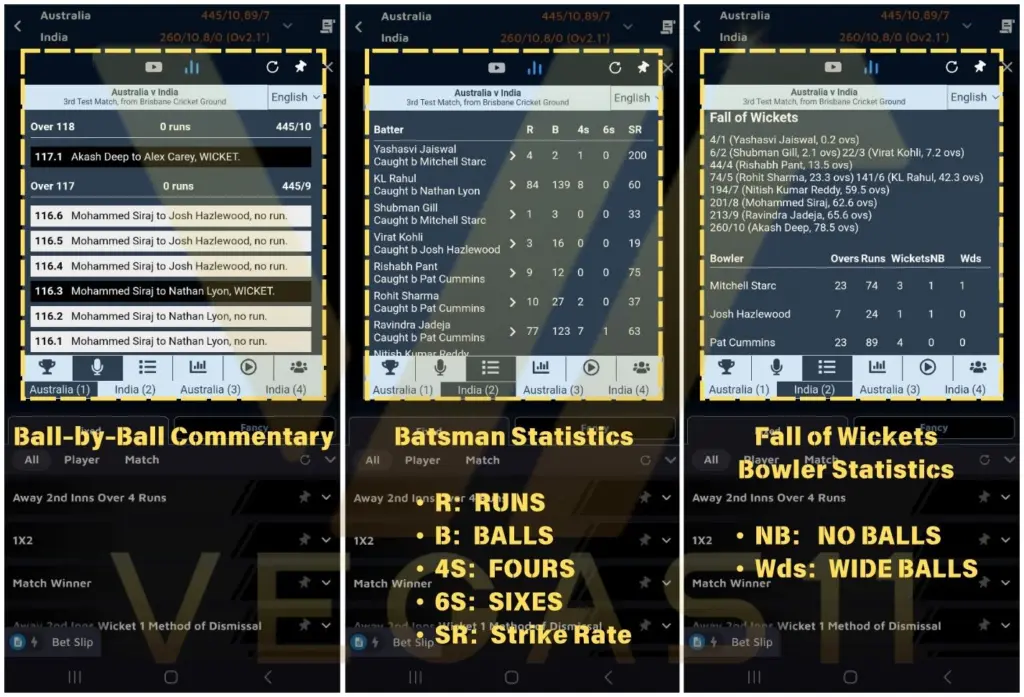
Live Cricket Score on Mobile
Current Statistics of Both Batsmen
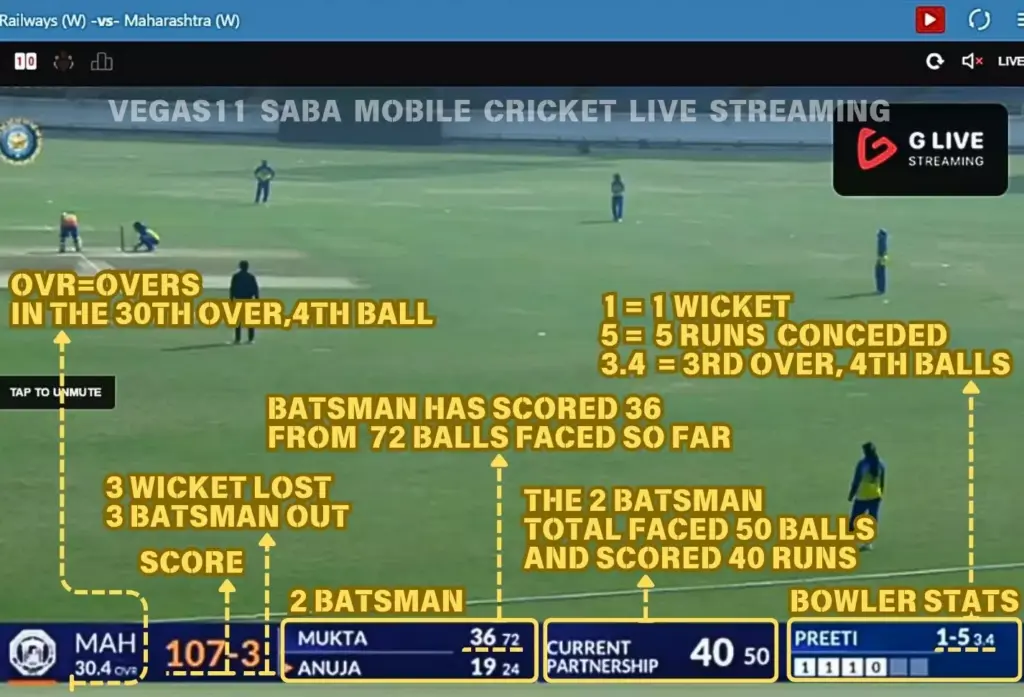
Next to the batsman’s name, you’ll usually see two numbers: the bigger one (36 & 19) shows the current score, and the smaller one (72 & 24) indicates the number of balls faced.
If there’s a small arrow in front of a batsman’s name, it usually means that they are the current batter.
Related Reading: Top 10 Best Batsmen in IPL History
Bowler’s Current Statistics
- The bowler’s stats typically show the bowler’s name, followed by the runs conceded in 6 balls.
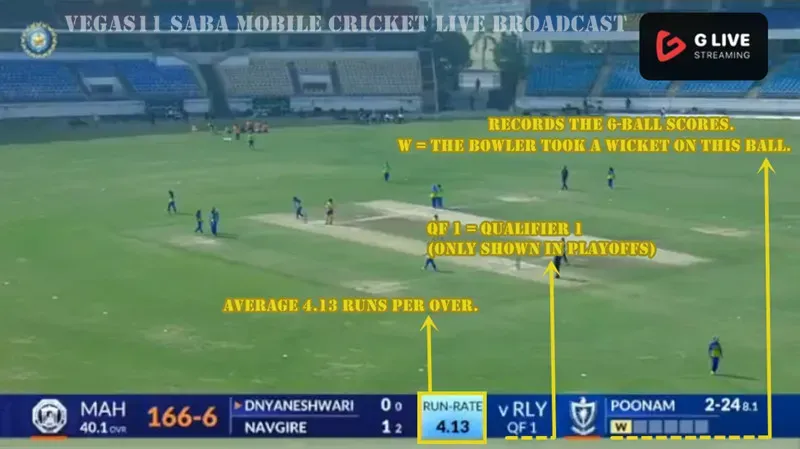
- The larger number on the right represents the number of wickets taken and the total runs conceded (2-24).
- The smaller number shows the current number of overs bowled and the ball being bowled in the current over (8.1).
Example: 1-5 3.4
1 = Wicket, 5 = Runs conceded, 3 = Overs bowled, 4 = Current ball.
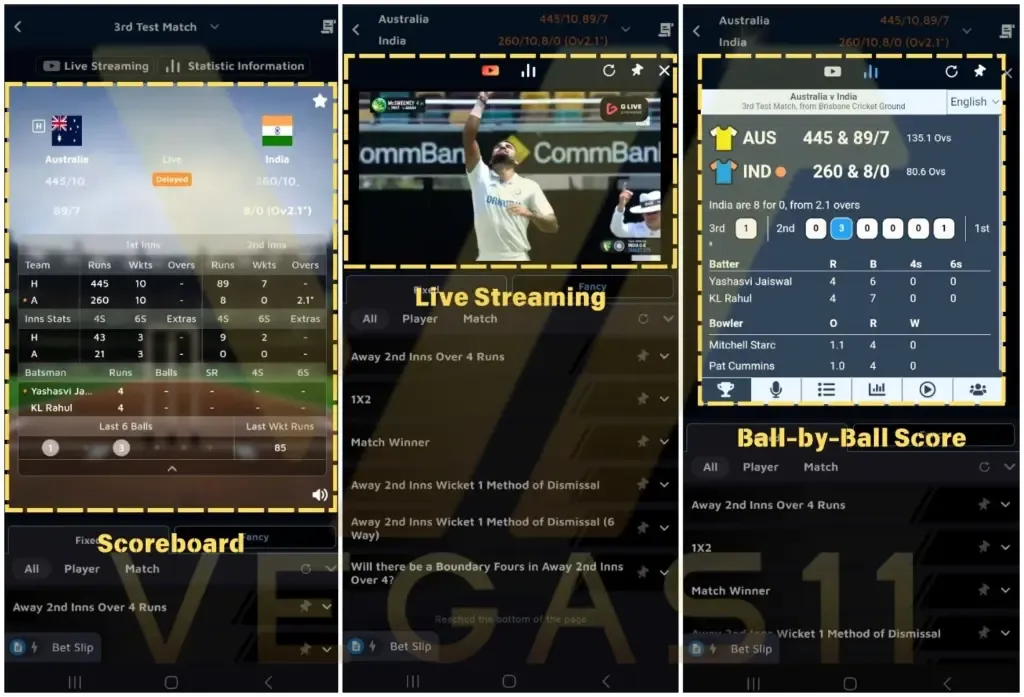
Want to see a more detailed cricket scoreboard? Just register for a free Vegas11 account, and you’ll get access to detailed and easy-to-read match stats!
And don’t worry, Vegas11’s live stream customer support is always ready to guide you on how to place cricket bets. Watching the match is fun, but betting on it makes it even more thrilling, yaar!
How to Read Cricket Score on TV
On the cricket scoreboard on TV, in addition to the data visible on the mobile version, you’ll also see the bowler’s speed, updates on extras, boundaries, and even other more detailed stats like ECO, RR, SR, and REQ. Come find out what these stats mean!
Quick Read: How Does Cricket Scoring Work? Explained with Pictures!
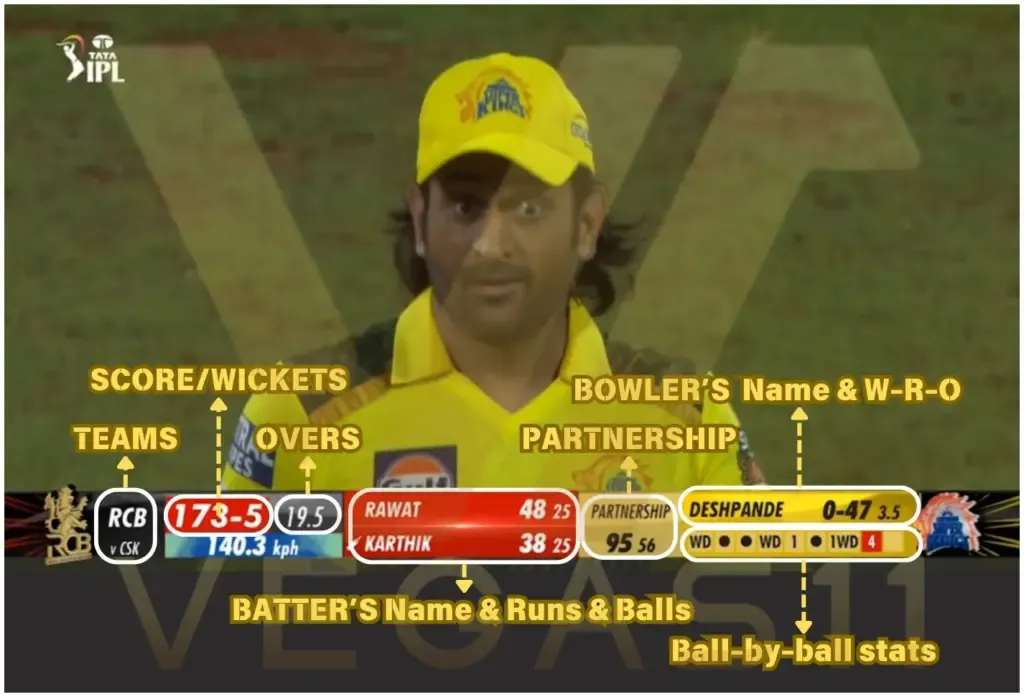
- Partnership: The total runs and balls faced by the two batsmen.
- Ball-by-ball stats:
- WD = Wide ball, the batting team is awarded 1 run, but it is not counted as a legal delivery. The bowler must bowl again.
- ● = The batting team scores no runs on that ball.
- 1WD = The batting team gets 1 run for the wide ball and 1 run for running, totaling 2 runs.
- 4 = Boundary (4 runs).
What Does Ball-by-Ball Mean
Record the bowler’s deliveries for each over, including legal balls, wide balls, and no balls. A bowler needs to bowl 6 legal balls to complete an over and move on to the next one.
Example: WD ● ● WD 1 ● 1WD 4
| Ball Number | Delivery | Runs Conceded |
|---|---|---|
| 1st | WD | 1 |
| 2nd | ● | 0 |
| 3rd | ● | 0 |
| 4th | WD | 1 |
| 5th | 1 | 1 |
| 6th | ● | 0 |
| 7th | 1WD | 2 |
| 8th | 4 | 4 |
The above record shows 5 legal balls: ● ● 1 ● 4; The bowler must deliver 6 legal balls to complete an over.
Key Metrics inCricket
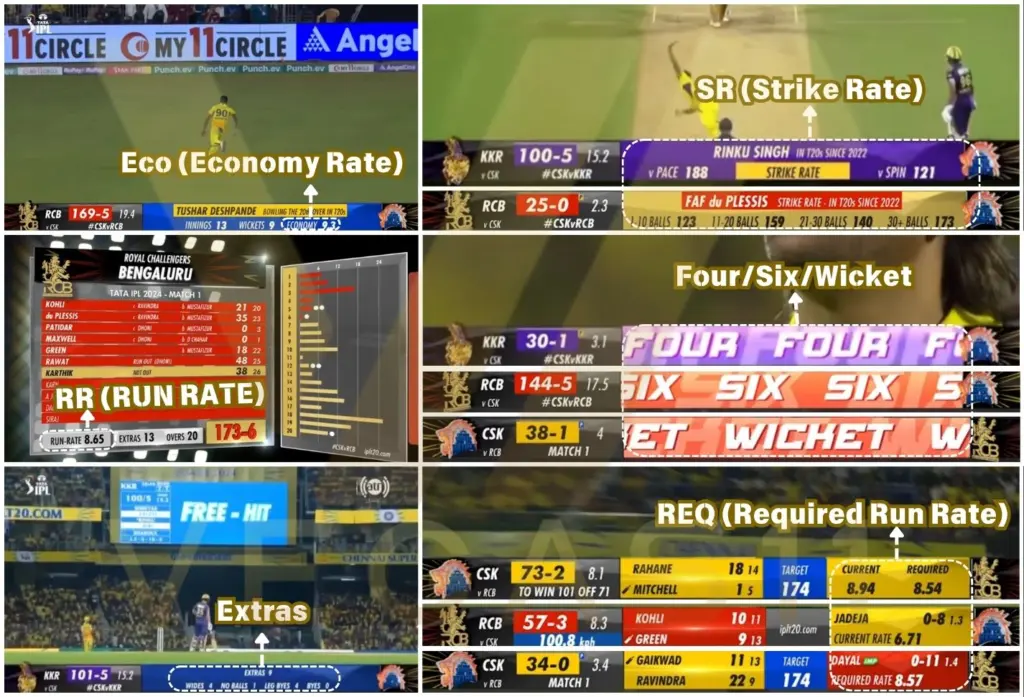
- SR (STRIKE RATE)
- The average number of runs scored per 100 balls. This measures a batsman’s scoring speed.
- ECO (ECONOMY RATE)
- The average number of runs conceded per over bowled. A primary metric for bowler efficiency.
- RR (RUN RATE)
- The average number of runs scored per over by the batting team throughout an innings.
- BOUNDARIES & WKTS
- Total count of Fours (4s), Sixes (6s), and Wickets taken during the match duration.
- EXTRAS
- Additional runs awarded to the batting side (Wides, No-balls, Byes, and Leg-byes).
- REQ (REQUIRED RR)
- The specific average run rate the chasing team must maintain to successfully reach the target total.
Cricket Scoreboard at the Stadium
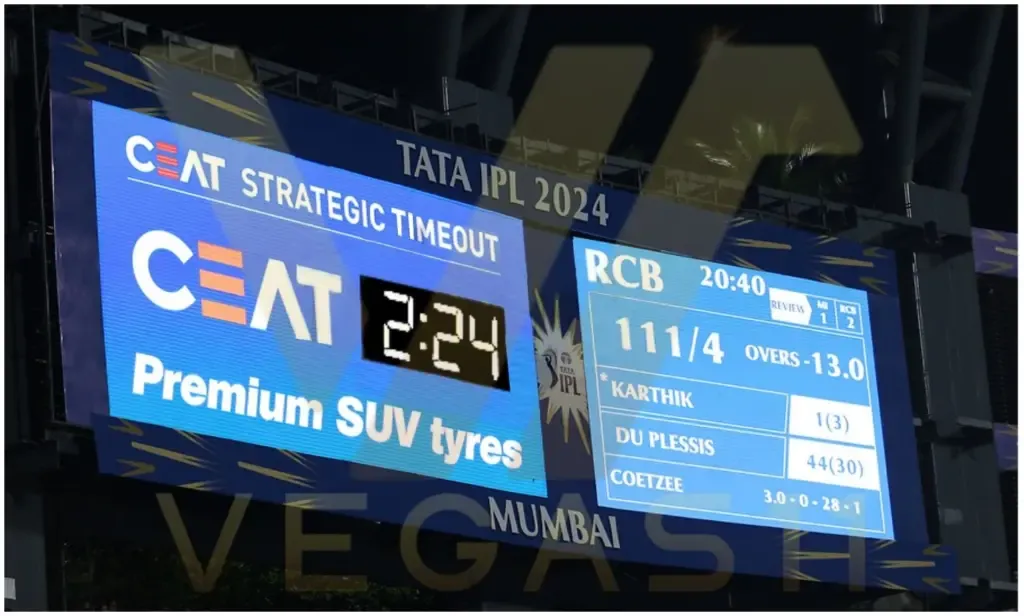
IPL Team Stats
- Time: The current time.
- Team: The name of the batting team, helping fans quickly understand which team is currently on the offense.
- Review: The number of times the team has challenged an umpire’s decision (the DRS system will be used to review the decision). Each team has 2 opportunities to review an umpire’s decision (successful challenges do not reduce the number of available reviews).
- Score: The team’s total score (including individual extras and batsmen’s scores).
- Wickets: The number of wickets lost by the batting team.
- Overs: The number of overs and balls completed by the team.
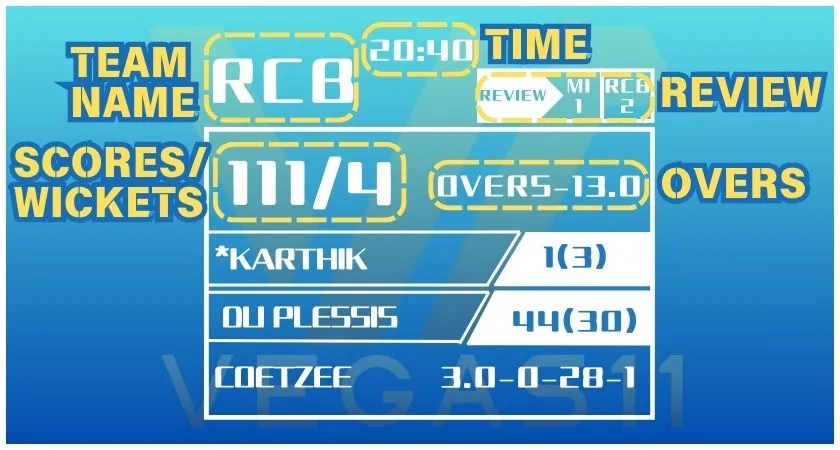
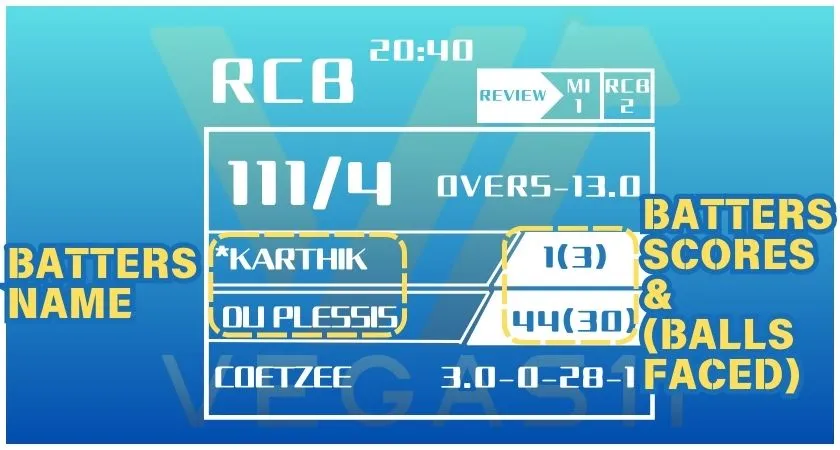
IPL Batter Stats
Batters: The names of the two batsmen currently on the field, with a * indicating the current striker. The names are followed by their individual scores and the number of balls they have faced.Score: The individual score of the batsman, excluding extras.Balls Faced: The number of balls faced by the batsman.
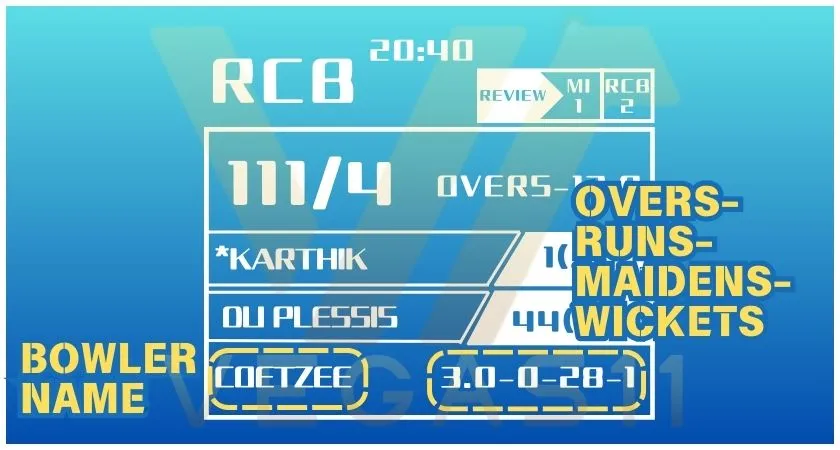
IPL Bowler Stats
The name of the current bowler; along with the bowler’s performance. As shown in the image: 3.0 – 0 – 28 – 1.
| Stat | Example | Description |
|---|---|---|
| O (Overs Bowled) | 3.0 | The bowler has bowled 3 overs so far. |
| M (Maidens) | 0 | No maiden overs, indicating runs have been conceded in every over. |
| R (Runs) | 28 | Total runs conceded by the bowler, 28 runs. |
| W (Wickets) | 1 | The bowler has taken 1 wicket so far. |
Live IPL Cricket Scoreboard Update
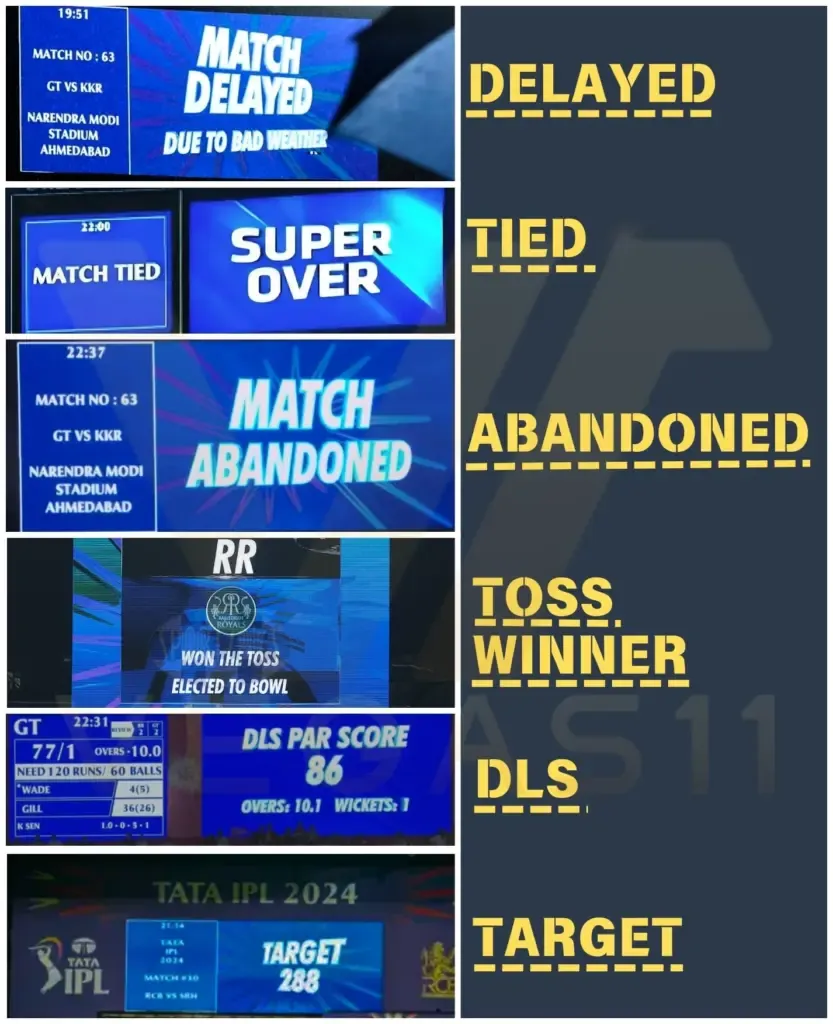
Most IPL stadiums now use advanced display screens that separate match information into Permanent Information and Updates. This feature makes it much easier for fans to follow the score and keep track of the teams’ current status.
- DLS (METHOD)
- The score target calculated using the Duckworth-Lewis-Stern method, displayed after a match is interrupted by rain or other factors.
- DELAYED
- Indicates the match start or resumption is pushed back due to weather, field conditions, or technical issues.
- ABANDONED
- The match is officially called off without a result, usually when the minimum required overs cannot be completed due to rain.
- TARGET
- The specific total that the team batting second must surpass to win the game.
- TIED
- Occurs when both teams finish with the exact same score. In modern limited-overs cricket, a Super Over is typically played to decide the winner.
Recommended Reading: IPL Rules Guide: Match Rules, Player Retention, and Mega Auction
Cricket Scoreboard FAQ
What do “WD” and “NB” mean?
“WD” stands for Wide ball, and “NB” stands for No-ball. These are types of illegal deliveries that grant the batting team extra runs and, in the case of a No-ball, often a “Free Hit.”
What does the time on the IPL scoreboard represent?
It represents the current time. In the T20 format, there is a strict 90-minute limit per innings. Displaying the clock helps spectators and officials track whether the bowling side is maintaining the required over rate.
What is a “Super Over”?
A Super Over is a tiebreaker used to determine a winner when scores are level at the end of the regular match. Each team plays one over (6 balls), and the team with the most runs in that over wins.
What is “Eco”?
“Eco” stands for Economy Rate. It is calculated as the average number of runs a bowler concedes per over. A lower economy rate indicates a highly effective performance in limiting the opponent’s scoring.
What is an “M” on a cricket scorecard?
“M” stands for Maidens. This refers to an over in which the bowler concedes zero runs (not counting leg-byes or byes which don’t count against the bowler).