
What Happens During Ratha Yatra? 2025 Schedule & History
Every summer, Puri’s Ratha Yatra draws millions of pilgrims from across India and beyond.
This guide covers the full story of Rath Yatra and the 2025 event schedule in one place!
In just 3 minutes, you’ll learn what each of the three deities represents, how the three chariots are different, and why the gods come out for this grand procession.
Ratha Yatra – The Day the Gods Go on Parade
Ratha Yatra is a 9-day festival held every year between June and July in India, celebrating three divine siblings: Lord Jagannath (the central deity and “Lord of the Universe”), Lord Balabhadra (his elder brother), and Devi Subhadra (his younger sister).
According to legend, Lord Jagannath is one of the avatars of Vishnu.
One day, he wished to leave his temple so that ordinary people could see and worship him — and that’s how the tradition of taking the gods out on giant chariots began.
Thanks to the efforts of A.C. Bhaktivedanta Swami Prabhupada and the ISKCON movement, the influence of Rath Yatra has spread far beyond India
The festival is now celebrated in over 108 cities worldwide every year.
Each of the Three Deities Symbolizes Something Unique
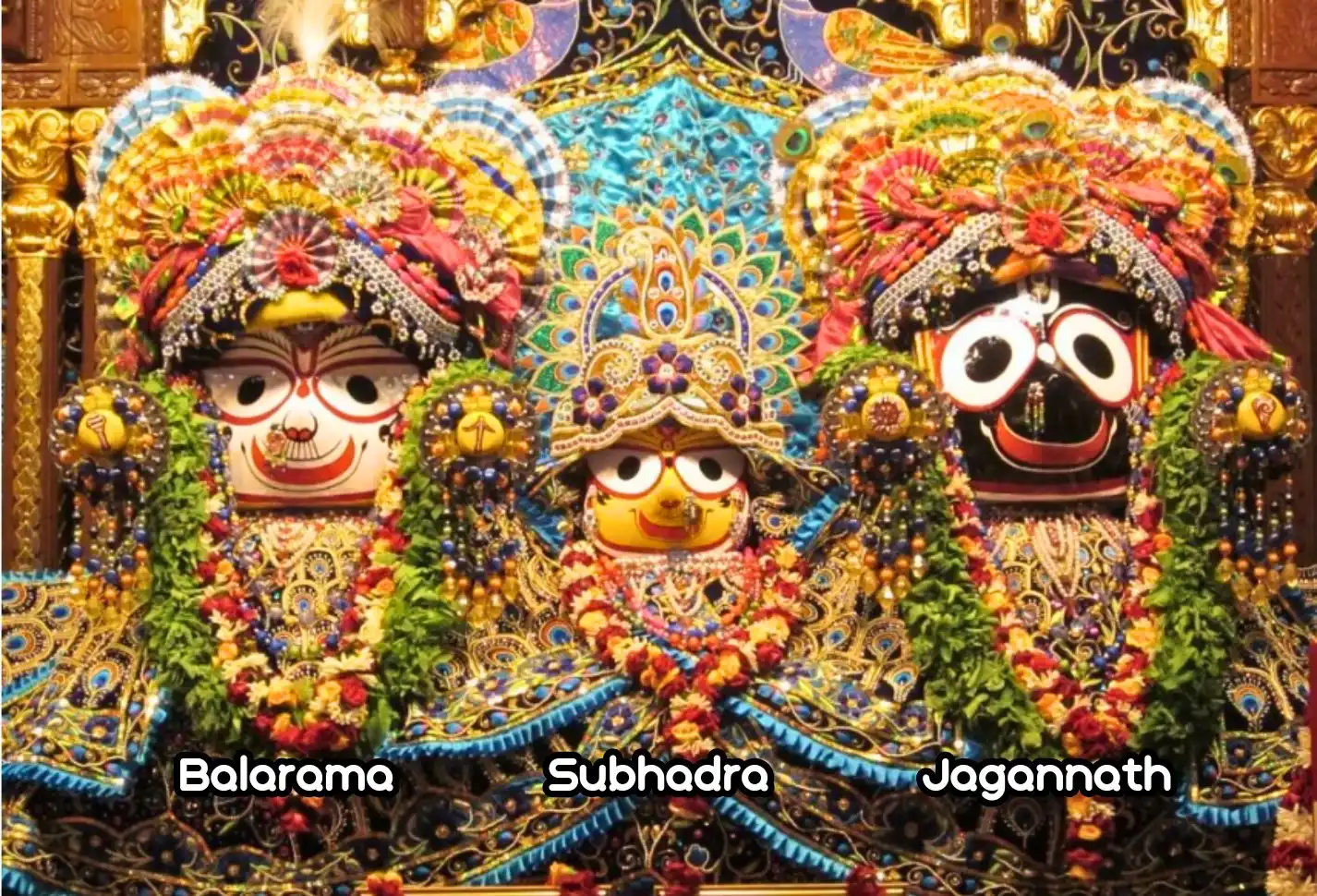
Jagannath is seen as the Lord of the Universe,he represents love, compassion, and divine wisdom.
Balabhadra stands for strength and righteousness, while Subhadra symbolizes wisdom and family harmony.
- Jagannath:
He symbolizes the divine love for humanity and the preservation of cosmic order. His form is usually depicted in black or deep blue, representing the infinite universe. - Balabhadra:
Known as a protector and warrior figure. His form is typically white, symbolizing purity and immense strength. - Subhadra:
She represents warmth in the family and the bond of love. Her image is usually yellow, signifying light and happiness.
You might also like: Krishna: The Only God Who Could Flirt and Conquer at Once!
Why Jagannath not human-like
Jagannath’s unique form comes from a famous mythological story.
According to legend, his idol was being carved from a sacred piece of wood, but the sculptor warned the king not to peek until it was finished.
The king, unable to resist his curiosity, secretly looked inside — and the sculptor vanished. The idol was left unfinished, with a large head and short arms and legs.
This form symbolizes that even though the deity may appear “imperfect,” his love and power are limitless. God doesn’t need a human-like body to protect and bless his devotees!
Why Are Jagannath’s Eyes So Big?
His large, round eyes symbolize that he sees everything — every corner of the universe and every thought in the hearts of his devotees.
Why Doesn’t Lord Jagannath Have Hands and Feet?
Jagannath’s idol doesn’t have fully formed limbs — only short, stubby arms. That’s because the carving was left unfinished, as told in the legend.
But this form also holds deep meaning: He doesn’t need human-like hands or feet to act. His power is everywhere, and he protects his devotees in ways beyond the physical.
The Three Chariots – Unique in Style and Spirit
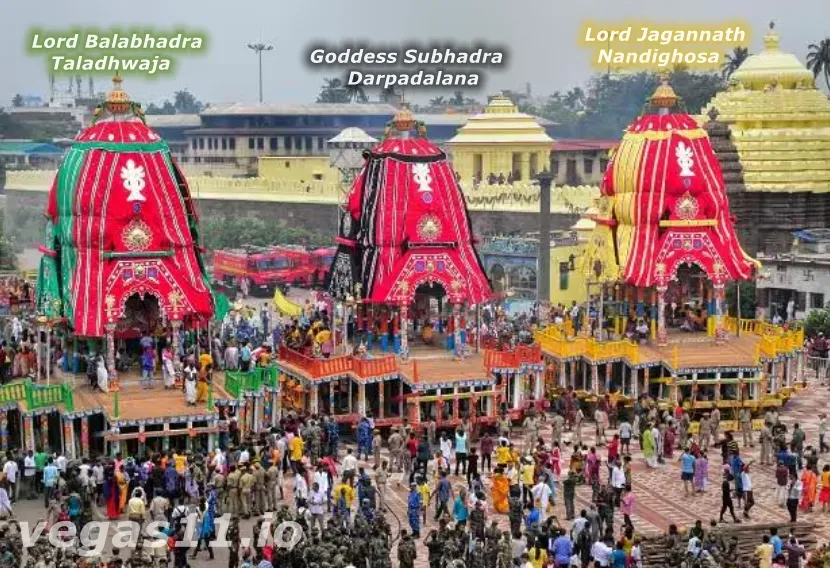
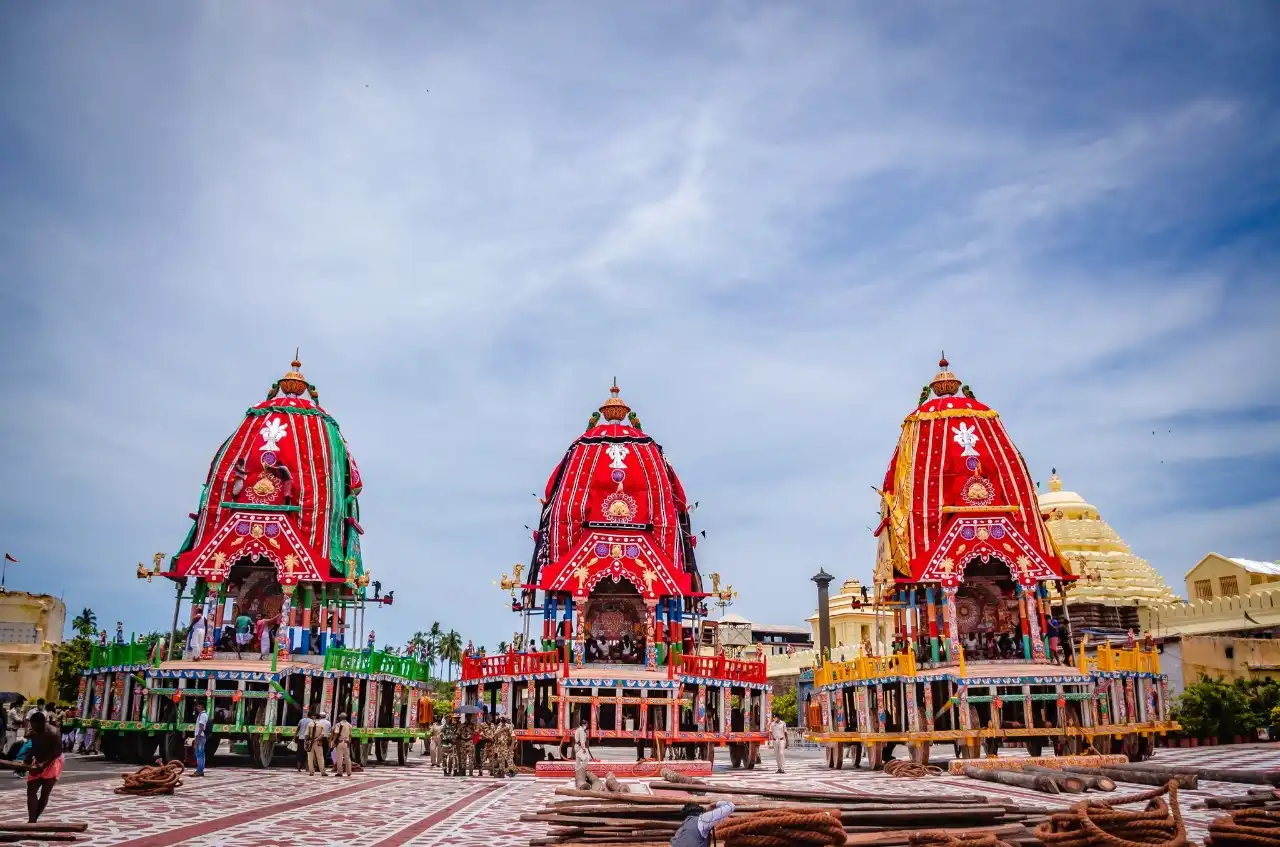
During Rath Yatra, each of the three deities rides in their own giant wooden chariot, and every chariot has a distinct name, color, design, and symbolic meaning.
Interestingly, the chariots are built from scratch every year using specific sacred wood. They’re about 13 meters tall, and old chariots are never reused!
Jagannath’s Chariot – Red & YellowJagannath rides the Nandighosha, a red-and-yellow chariot with 16 wheels. The flag on top features the Sudarshan Chakra, his divine weapon.
The chakra symbolizes divine power and the cycle of life, representing protection and the destruction of evil.
Balabhadra’s Chariot – Red & GreenBalabhadra rides the Taladhwaja, a red-and-green chariot with 14 wheels. The flag on top usually bears the symbol of a palm tree.
It represents strength and responsibility, as well as agriculture and grounded, practical power.
Subhadra’s Chariot – Red & BlackSubhadra rides the Darpadalana, a red-and-black chariot with 12 wheels. The top of the chariot is adorned with a lotus symbol.
It represents feminine energy and protective power, as well as a quiet but unshakable divinity. Many female devotees feel a special reverence for her sacred chariot.
See Also: Karni Mata Temple: Rat Worship for Good Luck?
How Much Does It Cost to Build One Chariot?
Constructing a full-sized sacred chariot can cost around ₹20 to ₹30 lakhs (2 to 3 million rupees).
Can Ordinary People Climb Onto the Chariots?
No — only selected priests and temple staff are allowed to climb onto the chariots.
Are the Old Chariots Burned?
Yes, the old Rath Yatra chariots are usually burned or dismantled after the festival ends. They are never reused.
Why Do the Chariots Suddenly Stop?
To devotees, a halted chariot has spiritual meanings, such as:
- The deity is tired
- The deity wants to spend more time with the devotees
- The deity is displeased about something
- At Mausi Maa Temple, the chariot stops intentionally for priests to offer Poda Pitha
When the chariots stop, people chant, pray, or shout “Jai Jagannath!” to calm the deity and request the journey to continue.
Can Anyone Pull the Chariots?
Yes! Anyone with a sincere heart is welcome to help pull the ropes. It’s seen as a great honor — and doing so is believed to bring blessings and good luck.
How Many People Are Needed to Pull Each Chariot?
- Nandighosa (Jagannath’s chariot): ~20 tons → needs 4,000–5,000 people
- Taladhwaja (Balabhadra’s chariot): ~18 tons → needs 3,000–4,000 people
- Darpadalana (Subhadra’s chariot): ~16 tons → needs 2,000–3,000 people
When Does Rath Yatra Start Each Year?
Ratha Yatra usually begins in late June or early July, lasting for 9 days. The exact start date changes every year, as it follows the Hindu lunar calendar.
The festival begins on the second day (Dwitiya Tithi) of the bright fortnight in the month of Ashadha.
For 2025, Rath Yatra is expected to start on June 27 and end on July 5.
Ratha Yatra Route – Journey to Gundicha Temple
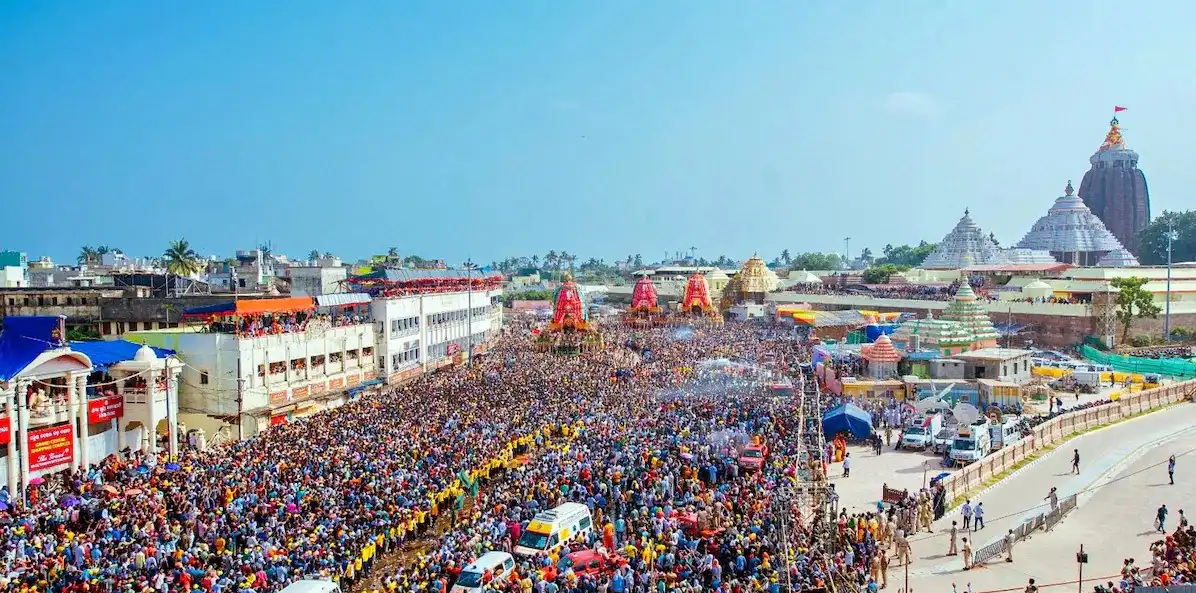
Every year in June or July, the three deities ride their giant chariots from the Jagannath Temple in Puri to the Gundicha Temple, about 3 kilometers away.
This temple is affectionately known as their “aunt’s house” or a symbolic birthplace/home from their past.
Why do they go there? Because Gundicha Temple is considered a special family place, where the gods go for a short retreat.
The deities stay there for about 7 days before returning to the main temple.
From departure to return, the entire journey takes 9 days.
2025 Ratha Yatra Schedule (Quick View)
- June 12: Snana Purnima (Holy Bathing)
- June 13–26: Anavasara (Gods rest)
- June 26: Netrotsava & Gundicha Marjana (Eye-opening & Temple cleaning)
- June 27: Ratha Yatra (Main chariot procession)
- June 27–July 3: Stay at Gundicha Temple
- July 4: Bahuda Yatra (Return chariot ride)
- July 5: Suna Besha (Golden attire)
- July 5: Niladri Bijay (Return to main temple)
The three deities — Jagannath, Balabhadra, and Subhadra — are brought out of the Jagannath Temple and bathed with 108 pots of sacred water, symbolizing purification.
Devotees watch from a distance, and the atmosphere is filled with excitement and devotion.
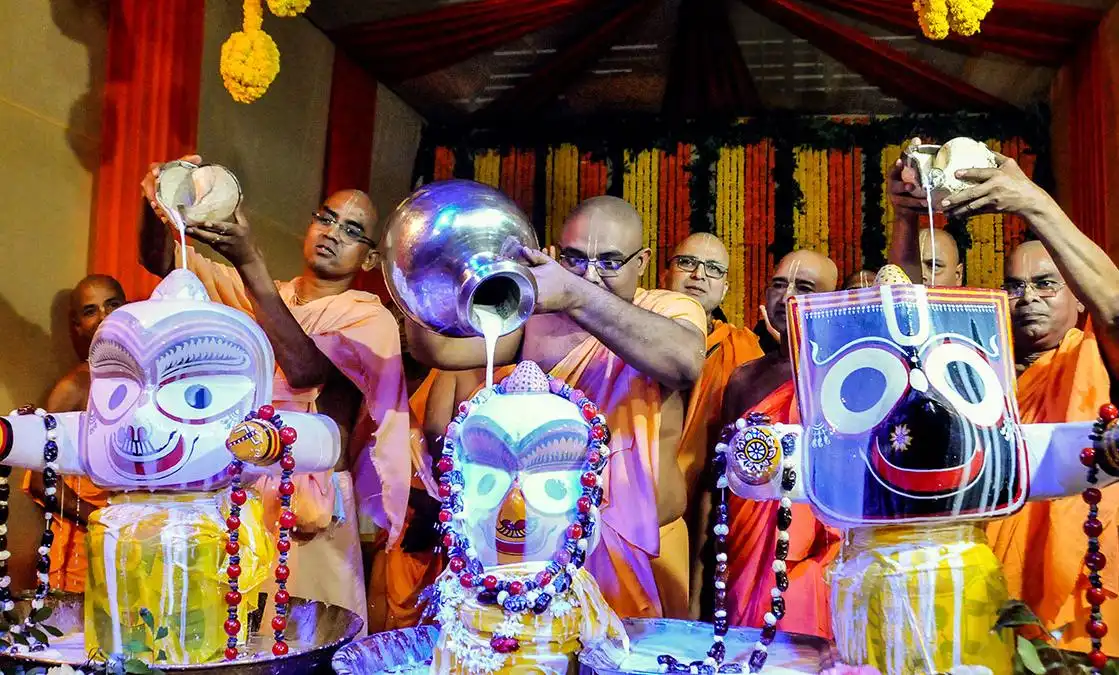
During this time, the deities are believed to be in a “healing” or resting state, and are kept in isolation for about 15 days.
Only selected Daitapati priests are allowed to enter the restricted area to perform secret rituals, such as applying herbal treatments and offering special food — symbolizing the divine recovery process.
June 26: Netrotsava & Gundicha MarjanaThe eyes of the deities are repainted, symbolizing their awakening.
Meanwhile, devotees clean the Gundicha Temple, preparing it for the gods’ upcoming visit.
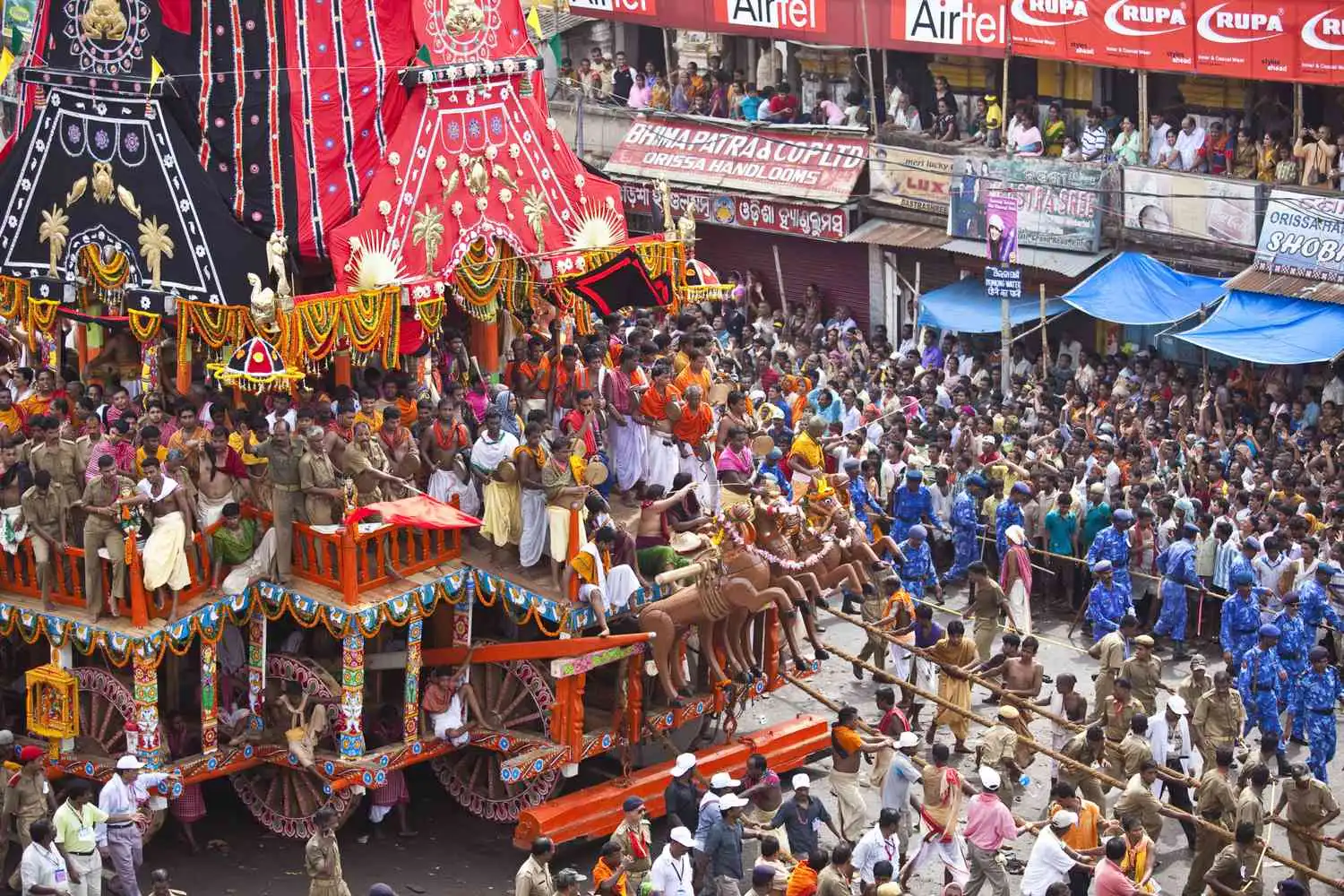
The main event begins! The deities are placed on their chariots — Nandighosa, Taladhwaja, and Darpadalana — and begin their grand 3 km procession from the Jagannath Temple to Gundicha Temple.
Thousands of devotees pull the ropes — it’s a breathtaking and powerful sight!
After reaching Gundicha Temple, the deities are placed in the main sanctum, where devotees come to offer prayers.
The gods “vacation” here for 7 days, while devotees sing, dance, and celebrate — the atmosphere is full of joy and devotion!
July 4: Bahuda YatraThe deities ride their chariots back to the Jagannath Temple, making a special stop at the Mausi Maa Temple along the way for a symbolic snack offering — marking the final leg of their journey.
July 5: Suna BeshaThe deities are adorned with shimmering gold ornaments, radiating divine glory!
This golden appearance, known as Suna Besha, draws the largest crowds. The ornaments weigh several hundred kilograms, symbolizing wealth, power, and holiness.
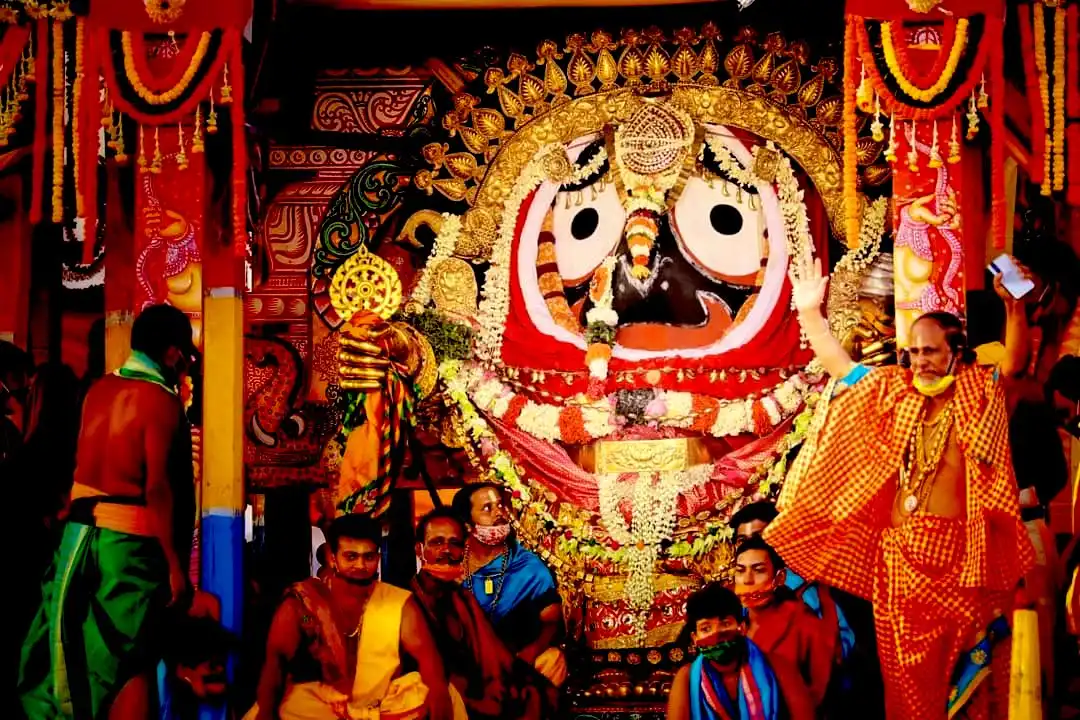
The deities return to the temple, marking the end of the 9-day festival.
With this final ritual, Ratha Yatra comes to a grand and sacred close.
Popular Articles: Amarnath Yatra 2025 Guide: , Shiva’s Ice Cave Legend,Route Details,Register
How to Reach Rath Yatra in Puri
After arriving at BBI, you can take a taxi, airport shuttle, or **Line 11 city bus** to the **Biju Patnaik Bus Terminal**.
Then transfer to an **OSRTC government bus** or a private bus going toward **Malatipatpur** or **Talabania** (₹100–200, 1.5–2 hours).
From there, take a **shuttle bus** (₹10–20, 15–20 min) to **Zilla School Chhak**, and walk ~1 km to the temple.
Or take an auto rickshaw (₹50–100, 20–30 min).